
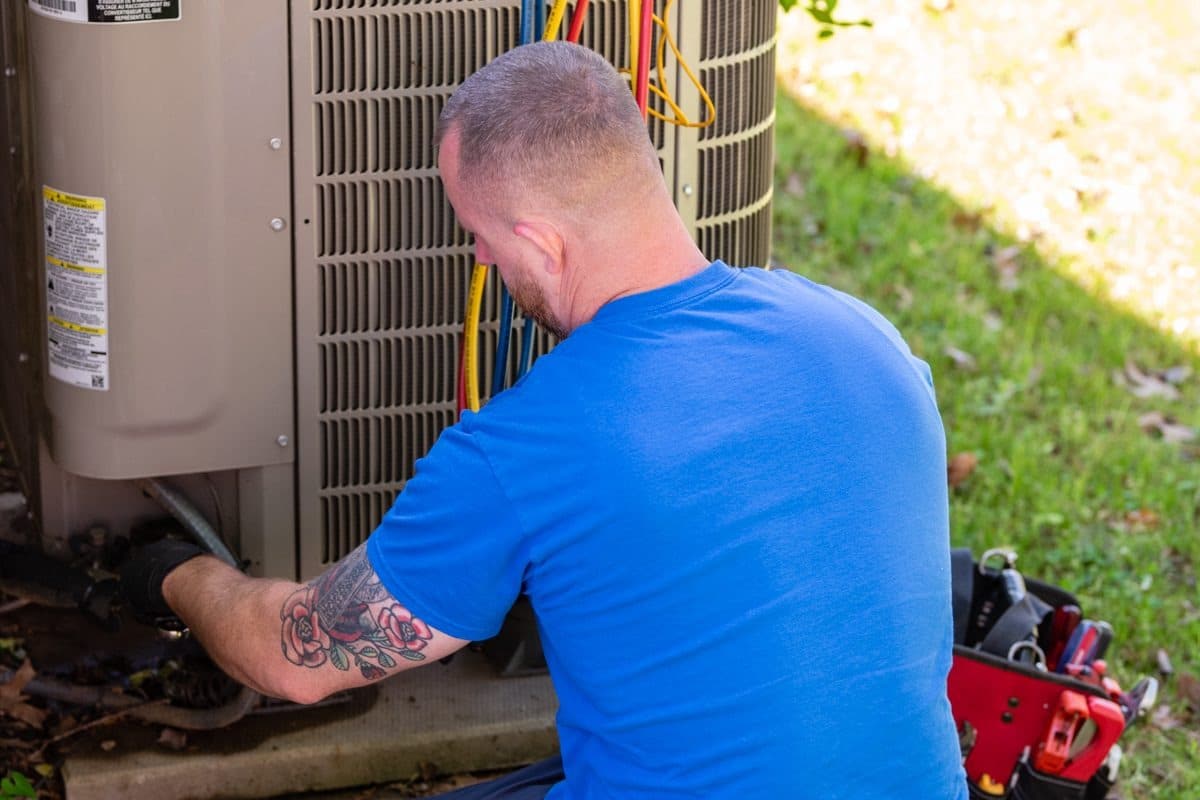
A small HVAC problem today doesn’t stay small for long. In fact, most of the expensive repairs we see started as something minor that sat untouched for months. This article walks through what actually happens when common issues go ignored — and why calling sooner almost always saves you money in the long run.
Key Highlights
That strange clunking sound from your HVAC system isn’t going to fix itself. Here’s why you should call your neighborhood HVAC experts sooner rather than later:
- Delaying repairs allows small problems to snowball into major, expensive failures.
- An inefficient system works harder, causing your energy bills to spike.
- Ignoring issues puts extra strain on components, leading to a premature replacement.
- Your home comfort and indoor air quality will suffer as the system struggles.
- Frequent repairs become more common when minor issues are left unaddressed.
- We’d rather perform a fair-priced fix now than a costly AC replacement on the hottest day of the year.
Why Do Homeowners Delay HVAC Repairs?
It’s tempting to brush off that weird noise or a slight dip in how well your air conditioner cools the house, especially when life gets busy. A lot of homeowners across Philadelphia and the surrounding suburbs put off calling for HVAC repair, hoping the problem is minor or that it’ll just go away on its own. More often than not, though, the hesitation comes down to worrying about the HVAC repair cost breakdown and figuring out how to fit an unexpected expense into the budget.
And yet, waiting is a gamble. That minor issue can escalate fast, turning what would’ve been an inexpensive fix into a full-blown system failure. On top of that, procrastination tends to drive up energy costs and lead to emergency repairs down the road — creating the exact financial strain you were trying to avoid in the first place.
Common Reasons for Putting Off Repairs
You know something’s off with your air conditioner, but you keep pushing the service call to another day. It’s an incredibly common scenario for suburban homeowners. The reasons usually boil down to a few things:
- “It’s not that bad yet”: The issue feels minor — maybe a faint noise or slightly less cool air — so it’s easy to brush aside.
- Time Constraints: Finding a convenient time for a technician to come out to your home in Cheltenham or Abington can feel like a hassle, especially with everything else going on.
- Fear of High Costs: The dread of what the repair bill might look like makes a lot of people hope the problem just resolves itself.
Here’s the thing, though. Those warning signs are your HVAC system’s way of asking for help. Strange odors or poor airflow aren’t just annoyances — they’re symptoms of an underlying problem. When you ignore them, minor issues have room to worsen, which ultimately leads to more complex and costly HVAC services. At Phila. Gas & Elec., we provide no-pressure service to diagnose the problem correctly the first time.
Impact of Budget Constraints on Repair Decisions
Financial concerns are, understandably, a big reason homeowners delay HVAC repairs. When you’re staring down an unexpected expense and you’re not sure what the final repair cost will be, it’s natural to hesitate. Many people worry about hidden costs or the labor costs tied to a complex job. According to a recent survey from Guardian Service, 71% of homeowners delayed repairs in 2025, with budgets dropping by 42%. The average delay stretched to over eight months — which gives small problems plenty of time to get much, much worse.
In the short term, it feels like you’re saving money. But in practice, this delay almost always backfires. A struggling HVAC system works harder, consumes more energy, and drives up your utility bills. What might have been a manageable repair can spiral into a system-wide failure that requires emergency repairs, and those are almost always more expensive.
We believe in fair pricing and transparency. Our science-based diagnostics pinpoint the exact issue so you only pay for what’s actually needed. We’d rather fix a $200 problem for you now than have you face a $4,000 part replacement in August.
The True Cost of Waiting: Small Fix vs. Major Overhaul
Putting off a seemingly small repair is a financial gamble, and the odds aren’t in your favor. What starts as a simple, affordable fix can cascade into a catastrophic failure that demands major repairs — or even a complete system replacement. The reasoning is straightforward: one struggling component forces every other part of your HVAC system to work overtime, which causes accelerated wear and tear across the board.
Meanwhile, according to industry data from Jobber, the home services market is stabilizing around repair-focused and routine maintenance spending heading into 2026. That’s a sign that more homeowners are catching on: a proactive approach to HVAC maintenance costs less than waiting for something to break. All of that extra effort from a compromised system chips away at your energy efficiency and sets the stage for a breakdown at the worst possible time — like during the summer heat.
How a Failed Capacitor Becomes a Burned-Out Compressor
Think of a capacitor as the part that gives your compressor and blower motor the jolt they need to start up. When it begins to fail, your system struggles to kick on. That puts immense extra strain on the compressor, which is essentially the heart of your AC unit. You might hear a clicking sound, or notice your air conditioning unit struggling to start.
If you ignore those common signs, the capacitor will eventually give out completely. And in the process, the continuous stress can cause the compressor to overheat and burn out. Just like that, a simple fix has escalated dramatically.
- A failing capacitor is one of the most common and inexpensive fixes in HVAC services.
- A burned-out compressor is one of the most expensive repairs — and sometimes makes a full system replacement the more logical option.
This chain reaction is exactly why timely repairs matter so much. Catching small problems early prevents them from causing irreversible, costly replacements.
Typical Cost Comparisons: Repair Now vs. Replacement Later
The math on delaying HVAC repairs rarely works in your favor. Addressing an issue early is almost always significantly cheaper than waiting for a complete failure. When one small part is causing trouble, it can strain the entire system and lead to the failure of more expensive HVAC equipment. Here’s how a few common scenarios compare.
When you put off a small repair, you’re not just risking a bigger bill for the part itself. You’re also looking at higher labor costs for a more complex job. A simple part swap can become a multi-hour emergency call. And in some cases, the damage gets so extensive that a full system replacement becomes the only viable option.
| HVAC Issue | Cost to Fix Now (Approx.) | Cost to Fix Later (Approx.) |
| Failing Capacitor | $150 – $400 | $3,500 – $4,500+ (Compressor Failure) |
| Refrigerant Leak | $250 – $1,500 (Patch & Refill) | $3,000 – $5,000+ (Evaporator Coil Replacement) |
| Noisy Blower | $150 – $500 (Minor Repair) | $500 – $2,000+ (Full Blower Motor Failure) |
It’s also worth noting that refrigerant costs are shifting across the industry. Under the federal AIM Act, new HVAC systems manufactured after January 2025 are required to use R-454B, a lower-impact refrigerant that’s replacing the R-410A found in most existing systems. Your current R-410A system isn’t going anywhere — you can keep running it and servicing it for its full lifespan. However, as R-410A production winds down over the coming years, the cost of that refrigerant will gradually climb. So if your system has a small leak that you’ve been putting off, it’s worth understanding that the price of a refill today is likely lower than it’ll be two or three years from now. And if a full system replacement does become the right call down the road, the new R-454B equipment is already widely available and performs comparably to what you have now.
Effects of Delayed Repairs on Comfort and Efficiency
When your air conditioning unit isn’t running right, the consequences go well beyond your wallet. Your home comfort and indoor air quality take a direct hit. A struggling cooling system simply can’t maintain a comfortable temperature, which leaves you dealing with uneven heating or cooling and frustrating hot spots throughout the house.
On top of that, a malfunctioning system has a much harder time filtering and dehumidifying the air. Over time, this leads to a noticeable decline in air quality and a drop in overall energy efficiency — making your home both less pleasant and more expensive to run.
Increased Energy Use and Higher Utility Bills
A compromised HVAC system has to work significantly harder to heat or cool your home. That extra effort translates directly to increased energy consumption. For example, a dirty coil or a clogged air filter restricts airflow, which forces the cooling system to run longer and more frequently just to reach the temperature on your thermostat. It’s a silent drain on your finances that adds up fast.
You’ll notice it on your utility bills before long. An air conditioner with low refrigerant levels or a failing motor can use substantially more electricity to produce the same amount of cool air. What seems like a small performance issue can easily tack a noticeable amount onto your monthly energy expenses.
At the end of the day, putting off repairs means you’re paying more for less comfort. That wasted money could’ve gone toward a simple repair that would’ve restored the efficiency of your system — and brought your energy bills back down. The Department of Energy recommends regular maintenance and prompt attention to issues for exactly this reason.
Disrupted Home Comfort and Indoor Air Quality
One of the first things you’ll notice when your HVAC system is struggling is a drop in overall comfort. A problem with the blower motor or ductwork can lead to poor airflow, which causes some rooms to feel stuffy and warm while others stay chilly. Those uncomfortable temperatures make it genuinely difficult to relax in your own home.
Even more concerning, though, is the impact on your indoor air quality. A malfunctioning air conditioning system can’t effectively remove humidity, dust, and allergens from the air. As a result, this can lead to several problems:
- Increased allergens and pollutants circulating throughout your home.
- Potential for mold and mildew growth in ducts and around vents.
- Aggravated respiratory issues for sensitive family members — particularly children and older adults.
In furnaces specifically, a cracked heat exchanger can even lead to dangerous carbon monoxide leaks. That’s a real safety risk. Prompt heating system repair in these situations isn’t just about comfort levels — it’s about keeping your family safe. If you’re noticing strange odors or any of these warning signs, it’s worth getting a professional maintenance visit scheduled sooner rather than later.
Why Philadelphia Gas & Electric Handles HVAC Repairs Differently
We’ve been doing this since 1955, and in that time, we’ve learned something that still holds true: most homeowners don’t need a sales pitch. They need someone to tell them what’s actually going on with their system. That’s the foundation of how we approach every single service call. Our science-based diagnostics start with your house — how it’s built, how the air moves through it, and what your HVAC equipment is actually doing — before we ever talk about repairs or costs. As a result, you get a clear picture of the problem, and more importantly, you get an honest answer about what it’ll take to fix it.
What makes that possible, in large part, is our team. Our newest technician has been with us for 15 years. When someone with that kind of experience walks into your home, they’re not guessing. They’ve seen your exact problem dozens of times before, and they know how to get it right the first time. That kind of tenure is almost unheard of in this industry, but it’s something we’ve held onto because it matters. It matters to us, and it matters to the homeowner sitting in a warm house in July wondering what went wrong.
We also recommend professional maintenance twice a year — once in the spring for your air conditioning and again in the fall for your heating system. For heat pumps, once a year is the standard, but for a typical setup with a gas furnace and central AC, two visits keeps everything running the way it should. Our existing customers already know the drill. But if you’re reading this blog for the first time, that’s the cadence we suggest, and it’s a big part of what keeps small problems from turning into the expensive ones we’ve been talking about throughout this article.
We’re also a factory-authorized Bryant dealer, which means when a system replacement does become the right call, you’re getting HVAC equipment that’s built to last — installed by people who know it inside and out. But here’s the thing: we don’t jump to replacement. If your system can be repaired fairly, we’ll tell you that. If a dirty filter or a small leak is behind the issue, we’ll fix it and send you on your way. We charge up to 40% less than the mega-sized companies, not because we cut corners, but because we don’t have a corporate office to feed.
We’re third-generation family-owned, and we serve homeowners across Philadelphia, Cheltenham, Abington, Willow Grove, Horsham, and the surrounding communities. If something feels off with your system, give us a call. We’re happy to talk it through — even if the answer turns out to be “you’re fine.”
Frequently Asked Questions
What are the most common expensive issues caused by delayed HVAC repairs?
The most common expensive repairs we see from delayed HVAC maintenance include complete compressor failure, cracked heat exchangers in furnaces, and total blower motor burnout. In nearly every case, these major failures started as small, unaddressed problems that were given months to get worse.
Are there hidden costs to waiting on HVAC repairs?
Absolutely. Beyond the eventual major repairs, you’ll also deal with higher energy bills from an inefficient system. Additionally, other components can sustain damage from the extra strain, and you may face premature replacement of your entire unit — years before its expected lifespan is up.
Can delaying repairs affect how long my HVAC system lasts?
Without question. The lifespan of the HVAC system depends directly on proper care and upkeep. When you ignore minor issues or skip routine maintenance, you’re putting continuous strain on every component. Over time, that accelerated wear and tear means you could need a new unit years earlier than expected.