Across Philadelphia and the surrounding suburbs, winter brings unpredictable cold snaps, and a furnace breakdown during freezing weather is one of the most expensive emergencies a homeowner can face. Most people who end up needing an emergency heater repair could have caught the problem earlier, when it was still small and cheap to fix. This article explains how to prevent that panic call by taking smart actions now, and how it can save you money, stress, and a very cold night.
Where Preventative Maintenance Saves You Money Over Waiting for the Emergency
The answer may seem obvious because you assume emergency heater repairs cost more simply since it’s urgent, but the premium goes well beyond the repair itself, and there are several additional reasons it adds up so fast. When your furnace fails in January at midnight, you have no choice but to pay whatever it takes to restore your heat. Emergency service calls carry steep overtime fees, expedited dispatch charges, and inflated parts pricing.
Beyond that, emergency repairs might only address the immediate crisis. Technicians working under time pressure are significantly less likely to catch underlying issues that will trigger the next breakdown just a few weeks later. Preventative maintenance ensures that small problems are addressed before they have the chance to cascade into system failures. A worn blower motor, cracked heat exchanger, or clogged filter gets identified and fixed during a planned inspection, not during a midnight emergency. Research from the IAQA shows regular maintenance reduces breakdown risk by up to 95%, which is a hard figure to ignore.
Signs Your Furnace Needs Attention Before Winter Hits
Your furnace often sends early warning signals weeks or months before it fails completely. Recognizing these signs gives you time to schedule service before winter demand makes emergency appointments less likely.
- Strange noises: Rattling, banging, grinding, or squealing sounds indicate loose components, failing bearings, or combustion problems.
- Uneven heating: If some rooms stay cold while others overheat, your furnace may be struggling to distribute air evenly.
- Yellow or orange pilot light: A healthy pilot light burns blue. Yellow or orange indicates incomplete combustion and potential carbon monoxide (CO) production, a colorless, odorless gas that poses serious health risks. Annual furnace inspections catch faulty heat exchangers before they leak CO.
- Frequent cycling: If your furnace turns on and off more often than usual, it’s working harder to maintain temperature.
- Rising energy bills: If your heating costs spike without a change in usage, your system needs professional attention.
- Age over 15 years: Furnaces typically last 15-20 years. If yours is approaching that mark, schedule an inspection to assess its remaining lifespan.
Get Your Annual Furnace Inspection: The Smart Prevention Step
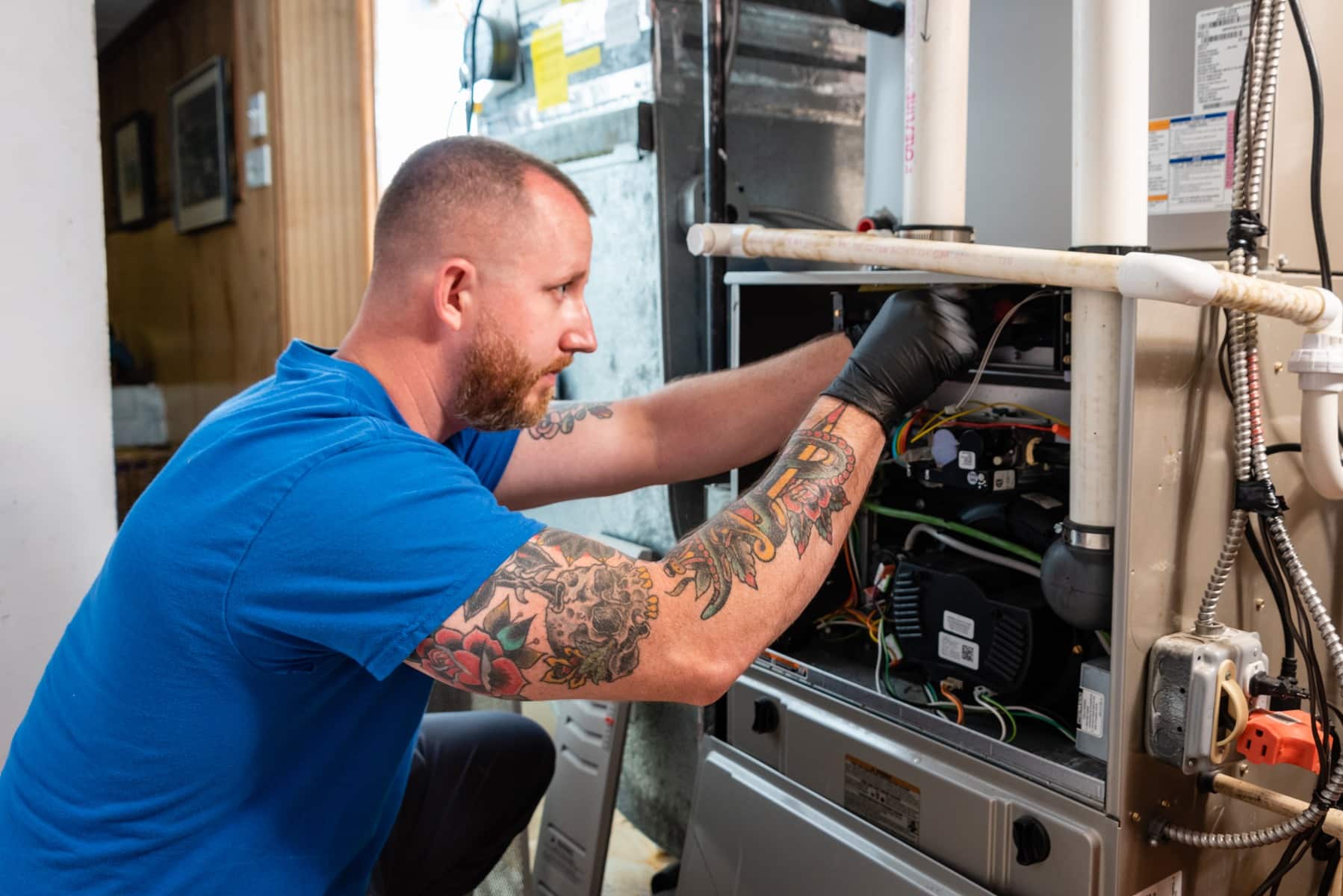
Scheduling an annual furnace inspection is the single most effective way to prevent winter emergencies. During a comprehensive inspection, a qualified HVAC technician should test combustion efficiency, check the heat exchanger for cracks, inspect the blower motor and capacitor, clean or replace the air filter, and validate that all safety controls function properly. This takes 1-2 hours and costs a fraction of an emergency repair.
For homeowners across Montgomery, Bucks, and Philadelphia Counties, scheduling an inspection in September or October through Philadelphia Gas & Electric’s Home Comfort Maintenance Plan means shorter wait times and peace of mind that your system is ready for the cold months. One annual visit can catch small problems early enough to keep your home warm all season. And when the first freezing night arrives, you can stay curled up on the couch instead of scrambling for a space heater.
How HVAC Maintenance Saves Money for Homeowners Year After Year
Maintaining your heating system year-round is the best way to get ready for harsh weather before it arrives. Regular tune-ups prevent the big, unexpected bills that come with a sudden breakdown. Maintenance also gives you an ongoing relationship with an HVAC professional who already knows your system and is ready to help when the harsher months hit.
Consistent maintenance extends furnace lifespan by 5-10 years. A well-maintained system can reach 20 years of reliable service; a neglected one may fail at 12-14 years. The difference in replacement cost is substantial. When you factor in avoided emergency calls, reduced energy waste, and extended equipment life, homeowners who follow a maintenance plan save thousands over your furnace’s lifetime.
Quick Checks, Safety Steps, and What to Have Ready When You Call
Even with perfect prevention, emergencies can still occur. Before you call a pro, run through a quick checklist:
- Make sure your thermostat is set to “heat” and the temperature is above room temperature
- Confirm the furnace power switch is on
- Check your circuit breaker for a tripped switch.
If those basic steps don’t restore heat, it’s time to call a professional for help. Have your furnace’s age, brand, and describe any unusual sounds or smells ready when you call, since that helps a technician arrive with the right parts. The ongoing HVAC technician shortage means winter schedules fill quickly, so a prepared description can speed things along. While you wait, close doors to unused rooms to keep heat in the spaces you’re using, and dress in warm layers. If you ever smell gas or suspect carbon monoxide, leave the house and call 911 right away.
What to Look For in a Home Comfort Maintenance Plan
Not every home comfort maintenance plan is built the same, so it helps to know what a good one should include before you sign up. Look for two annual tune-ups, priority dispatch when winter demand peaks, and discounts on repairs if something does go wrong. Philadelphia Gas & Electric’s Home Comfort Maintenance Plan covers all three, so you know who to call and what to expect. We put together this table to show how each approach plays out for your home once the cold sets in:
| Scenario | System Reliability | Winter Response Time | Peace of Mind |
|---|---|---|---|
| No maintenance, emergency repair needed | Higher risk of repeat failures | 24-48 hours during peak winter | Stress and uncertainty |
| No maintenance, multiple emergency repairs | Accelerated wear, potential early replacement | Repeated delays and disruptions | Recurring worry and disruption |
| Annual maintenance plan with priority dispatch | Early detection prevents 95% of breakdowns | Expedited response, shorter wait | Confidence your system is ready |
Take a moment to see which row sounds most like your home today. If it’s one of the two emergency scenarios, a small step now can change how your winter plays out, and a little planning goes a long way toward keeping every room comfortable no matter how low the temperature drops. If you have questions or want help sorting out what your home needs, our team is here for you whenever you need us.
Frequently Asked Questions
How can routine HVAC maintenance prevent emergencies?
Routine maintenance identifies worn components, cleans buildup that reduces efficiency, tests safety controls, and catches early-stage failures before they escalate. Industry data shows 80% of HVAC failures are caused by lack of maintenance and that systems lose 5-10% efficiency annually without service. A technician can catch a failing capacitor during inspection and replace it for $150, avoiding the $1,500 emergency repair that would occur if the motor burns out.
What’s included in an annual furnace inspection?
A comprehensive inspection tests ignition and combustion efficiency, inspects the heat exchanger for cracks, checks the blower motor and capacitor, cleans or replaces the air filter, validates thermostat function, and verifies all safety controls operate correctly.
Is emergency heater repair in Philadelphia available 24/7?
Many HVAC companies offer emergency service during winter months, though response times during severe weather may extend to 24-48 hours due to industry technician shortages; the Bureau of Labor Statistics projects 40,600 annual HVAC openings, creating persistent delays. Family-owned companies with local roots, like Philadelphia Gas & Electric, often respond faster than national chains because they prioritize the neighborhoods they serve year-round.